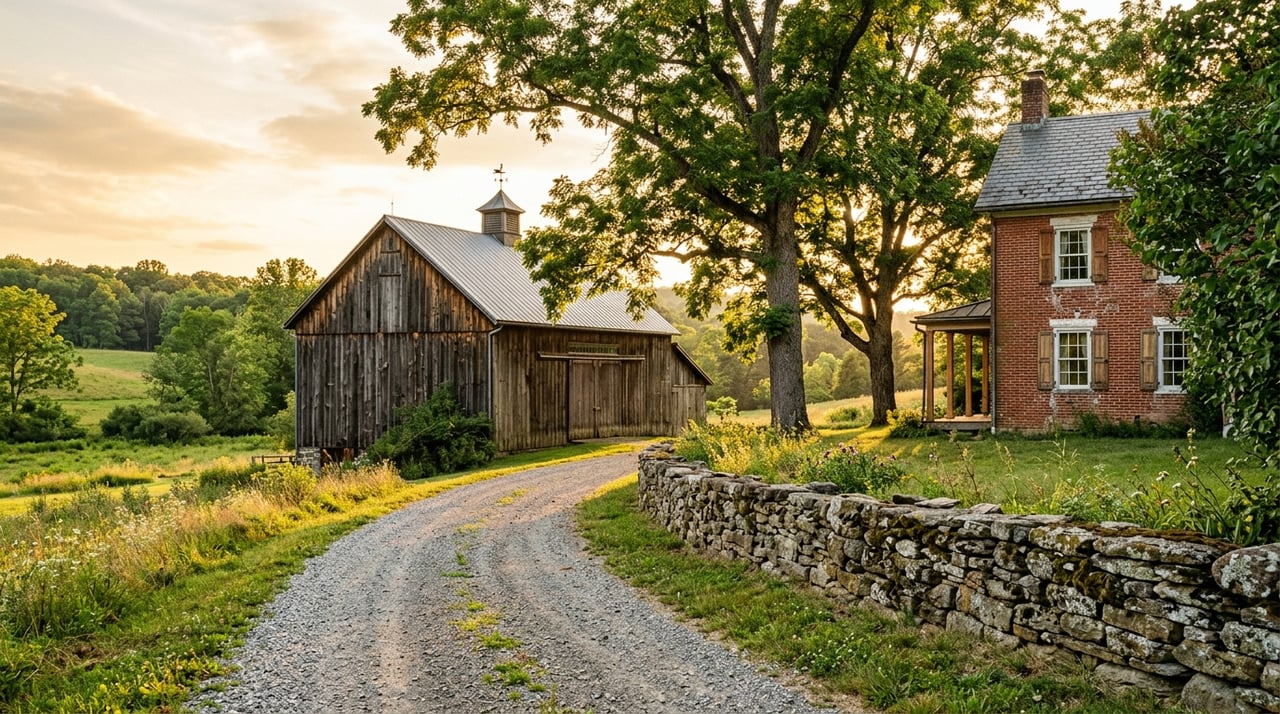
Wondering whether now is the right time to sell your land in Cumberland Furnace? That answer depends on more than acreage alone. If you own rural land here, your timing, property details, and tax situation can all shape what buyers may be willing to pay and what you actually keep at closing. Let’s dive in.
Cumberland Furnace land market basics
If you are trying to decide whether to sell, it helps to start with the bigger picture. Dickson County’s population grew from 54,315 in 2020 to 57,641 in 2024, which suggests ongoing demand pressure at the county level.
That said, land does not move like a typical resale home. The USDA 2022 Census of Agriculture profile for Dickson County reported 1,060 farms and 124,779 acres in farms, with an average farm size of 118 acres. In a market like this, buyers may be looking for a homesite, a recreational tract, agricultural land, or a larger long-term hold.
Current listing data also points to a smaller, more parcel-specific market. Recent Redfin land snapshots for Dickson County show 80 land listings with a median listing price of $400K, while ZIP code 37051 shows just 6 land listings with a median listing price of $550K. That limited inventory can help sellers, but it also means each tract is judged closely on its own merits.
Why parcel quality matters most
In Cumberland Furnace, not all land is valued the same way. Two properties with similar acreage can attract very different buyer interest based on access, utilities, buildability, and how the land fits current regulations.
Fannie Mae’s site guidance notes that value and usability are influenced by factors like size, shape, topography, utilities, street improvements, and adequate vehicle access. If public water or sewer is not available, well and septic viability become important, along with legal access and maintenance agreements for private roads. Those details can make a major difference when buyers compare one tract to another.
Current local listings reinforce that pattern. In 37051, listings often highlight road frontage, city water, existing septic or well access, and larger acreage. The practical takeaway is simple: build-ready or utility-supported land often draws stronger attention than raw acreage with unanswered site questions.
Signs it may be a good time to sell
You may have a stronger case for selling now if your property checks several important boxes.
Your land has clear access
Buyers and lenders want to know how the property is reached and whether that access is legally supported. If your tract has road frontage or documented legal access, that can reduce friction during due diligence.
Your boundaries are well defined
If boundary lines, easements, or shared access questions are unclear, buyers may hesitate. When those items are already documented, your property is easier to evaluate and easier to market.
Your property has utility or septic potential
If your land has public water access, an existing well, prior septic approval, or strong septic potential, it may appeal to a broader pool of buyers. Site readiness often supports stronger pricing because it lowers uncertainty.
Your likely use fits current zoning
According to Dickson County’s zoning resolution, Rural Areas are intended to preserve agricultural lands, forests, recreational areas, wildlife management areas, and other lower-intensity uses, while more intensive growth is expected in Planned Growth Areas and Urban Growth Boundaries. If your property’s likely use already aligns with current zoning, buyers may feel more confident moving forward.
Your tract matches current buyer priorities
Land buyers often focus on practical points that go well beyond acreage. The Appraisal Institute’s guidance on vacant land emphasizes highest and best use, meaning what the land could legally and financially become matters greatly. If your tract has a realistic use case today, that can support a timely sale.
Signs waiting may make more sense
Selling now is not always the best move. In some cases, waiting could protect your net proceeds or give you time to solve issues that affect value.
Greenbelt status could affect your bottom line
If your land is enrolled in Tennessee’s greenbelt program, that tax treatment may be saving you money now. The Tennessee Comptroller’s greenbelt guidance explains that if qualifying land is disqualified because the use changes, rollback taxes generally recapture the prior three years of savings on agricultural or forest land and five years on open-space land.
That does not automatically mean you should wait, but it does mean you should understand how a sale or change in use could affect your net proceeds.
Buildability questions are still unresolved
If buyers will need septic, subdivision potential, or future homesite value to justify your asking price, unresolved site issues can weaken your position. The TDEC septic process shows that dividing land into two or more lots for houses or development where septic will be used requires a subdivision evaluation.
If your parcel has not been evaluated yet, you may benefit from getting clearer answers before listing.
You are hoping future land-use changes lift value
County planning can influence future value, especially for land near growth corridors. Dickson County’s 2042 Comprehensive Plan materials show that the county is considering long-term factors like population, transportation, economic development, natural resources, and land use.
Recent county commission minutes from 2025 also show active land-use discussions, including rezoning requests from A-1 agricultural to C-1 rural center district for 6.39 acres and 22.3 acres. If your tract may benefit from future policy or zoning shifts, waiting could be worth discussing.
What buyers look at before making an offer
Land buyers in Cumberland Furnace usually do more homework than the average homebuyer. They often study the property’s practical limits before they focus on price.
Common buyer questions include:
- Where are the boundary lines?
- Is there legal and usable access?
- Are there easements that limit use?
- Is the site suitable for septic?
- Are utilities nearby?
- Does zoning support the intended use?
- Is any part of the property affected by floodplain conditions?
These questions line up with the appraisal, zoning, and site standards used in the research above. If you can answer them early, your listing may feel stronger and more credible.
How land value is really determined
A land sale is not priced like a home sale. There is no kitchen remodel, bedroom count, or interior finish package driving value.
Instead, land value is often tied to comparable vacant land sales, current market activity, and highest and best use. The Appraisal Institute explains that land appraisal reports focus on the property description, highest and best use analysis, comparable sales, and current market conditions.
That is why broad county averages only go so far. In Cumberland Furnace, parcel quality often matters more than simple acreage count.
Steps to take before you decide
If you are seriously weighing a sale, a little prep work can help you make a clearer decision.
Review your tax position
Check whether your property is in greenbelt and how a sale or use change could affect rollback taxes. Tennessee also reappraises property on a 4-, 5-, or 6-year cycle, and the Comptroller notes that assessed value and market value may diverge for years at a time.
Confirm access and boundaries
If those details are unclear, a survey may be worth considering. The Tennessee Board of Examiners for Land Surveyors exists to regulate surveyors and protect public health, safety, and welfare, which underscores how important accurate boundary work can be.
Investigate septic or split potential
If buyers are likely to value your tract as a homesite or possible split, getting clarity matters. TDEC’s septic construction permit guidance shows how site details, sketches, and sometimes soils information can be part of the process.
Check subdivision rules early
If your plan involves dividing land, do not assume it will be simple. Dickson County’s subdivision regulations require Planning Commission approval and filing, along with expectations for drainage, water, sewerage, utilities, and road-related improvements.
Consider a land-specific pricing strategy
If your parcel is unusual or there are few nearby comparable sales, it may help to get advice grounded in highest and best use rather than rough acreage math. That can lead to a more realistic pricing plan and a smoother selling process.
So, is it time to sell your land?
For many Cumberland Furnace owners, the answer comes down to this: if your tract has clear access, defined boundaries, usable site features, and a realistic use that fits current zoning, selling now may be worth serious consideration. County growth is real, inventory appears limited, and active land-use discussions suggest that buyers are paying attention to opportunities in the area.
On the other hand, if greenbelt savings are still important to you, or if access, septic, boundary, or subdivision questions remain unresolved, waiting may be the smarter move until you can strengthen the property’s value story.
If you want help thinking through how your land may fit today’s market, Cheryl Barrett offers experienced, client-focused guidance for rural and lifestyle properties across the region.
FAQs
How do I know if my Cumberland Furnace land is ready to sell?
- Your land may be more market-ready if it has clear access, known boundaries, workable utilities or septic potential, and a likely use that fits current zoning.
How does greenbelt affect a land sale in Cumberland Furnace?
- Tennessee’s greenbelt program can reduce property taxes, but if the land is disqualified because of a use change, rollback taxes may apply based on prior tax savings.
What makes one Cumberland Furnace parcel worth more than another?
- Value often depends on access, road frontage, utilities, septic feasibility, topography, zoning, and the property’s highest and best use, not just acreage alone.
Can I divide my land before selling in Dickson County?
- Possibly, but subdivision rules apply, and Planning Commission approval may be required along with standards for drainage, utilities, and road-related improvements.
Why do buyers ask so many questions about vacant land in Cumberland Furnace?
- Land buyers typically need to verify practical issues like access, easements, boundaries, zoning, and buildability because those factors directly affect how the land can be used.